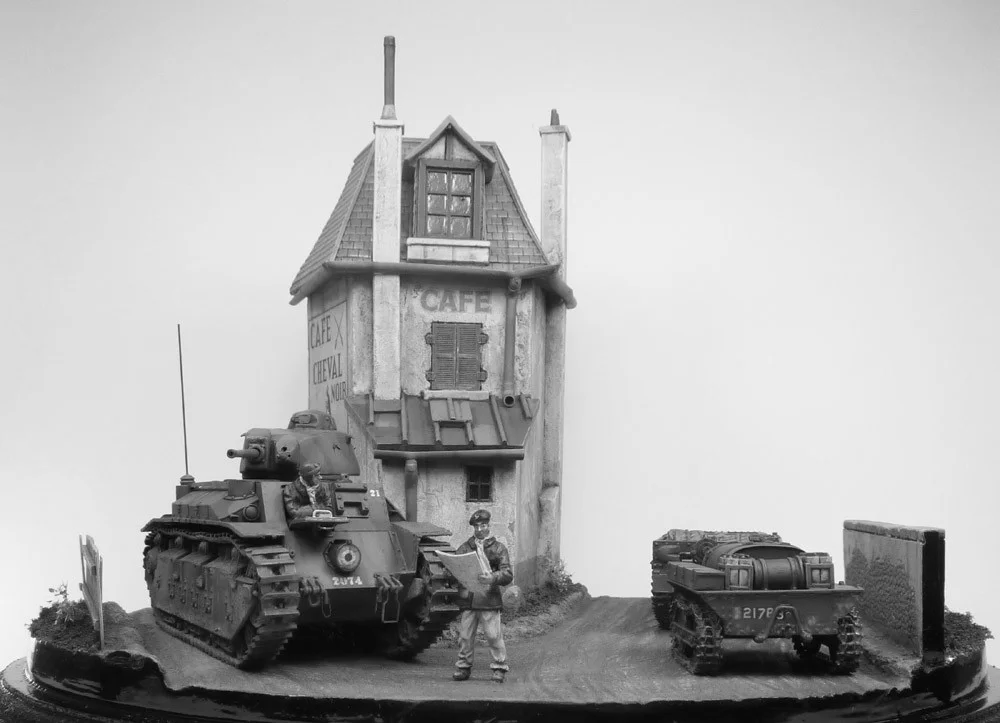
Or one of the reasons for creating the ATS
"Never again!" That is, according to oral tradition, what Colonel de Gaulle would have said when he had to stop, for lack of fuel, the advance of his tanks at the Battle of Montcornet, while a few kilometers away a full train of gasoline chartered by the Service des poudres was waiting to be distributed by the Artillery Services.
This problem will be resolved "immediately" because it is on November 25, 1940 (under the Vichy regime) that all responsibilities are entrusted to a single organization.
This new service is named the Army Fuel Service (SEA), a name it carries until September 2020 when it becomes the Operational Energy Service (SEO)
The SEO is a joint service of the French Army under the authority of the Chief of the General Staff of the Armed Forces.
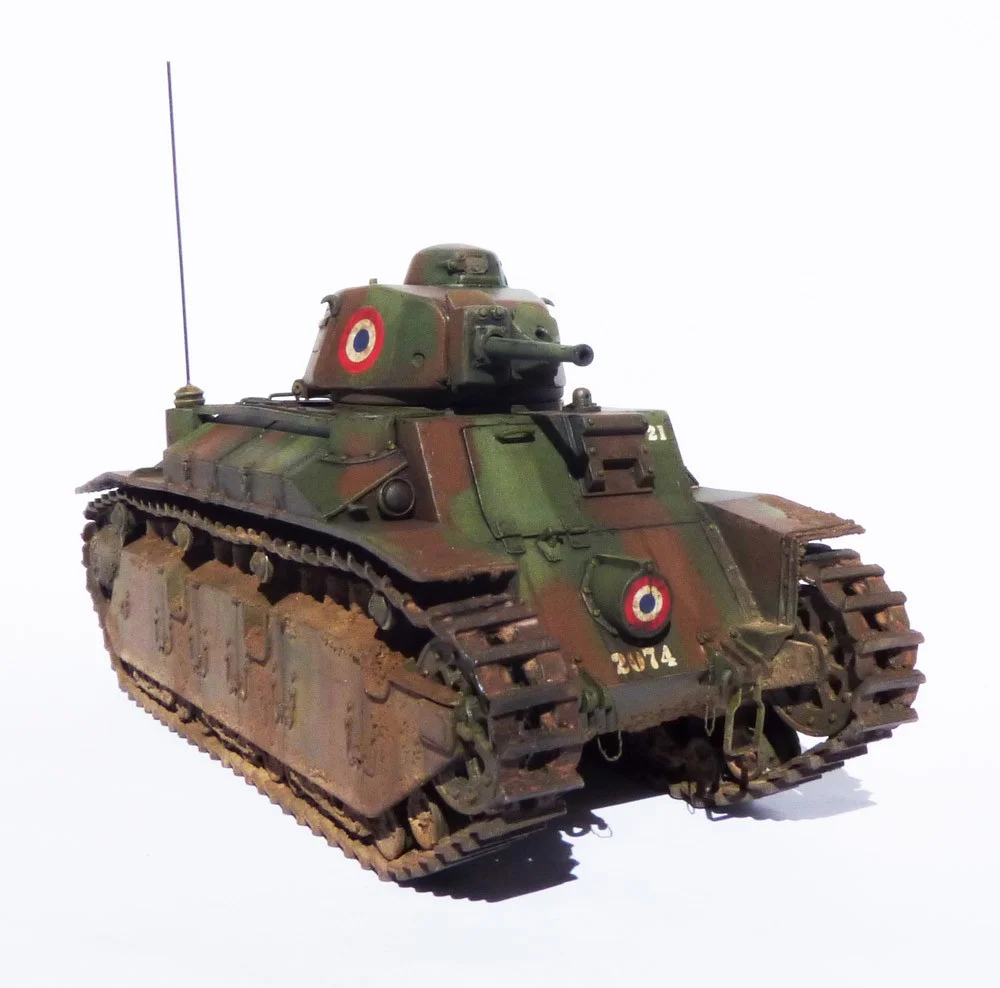
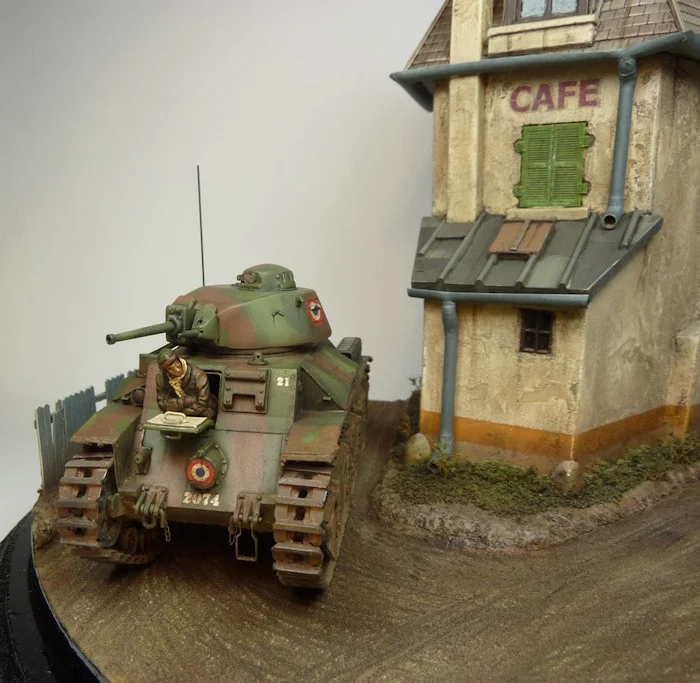
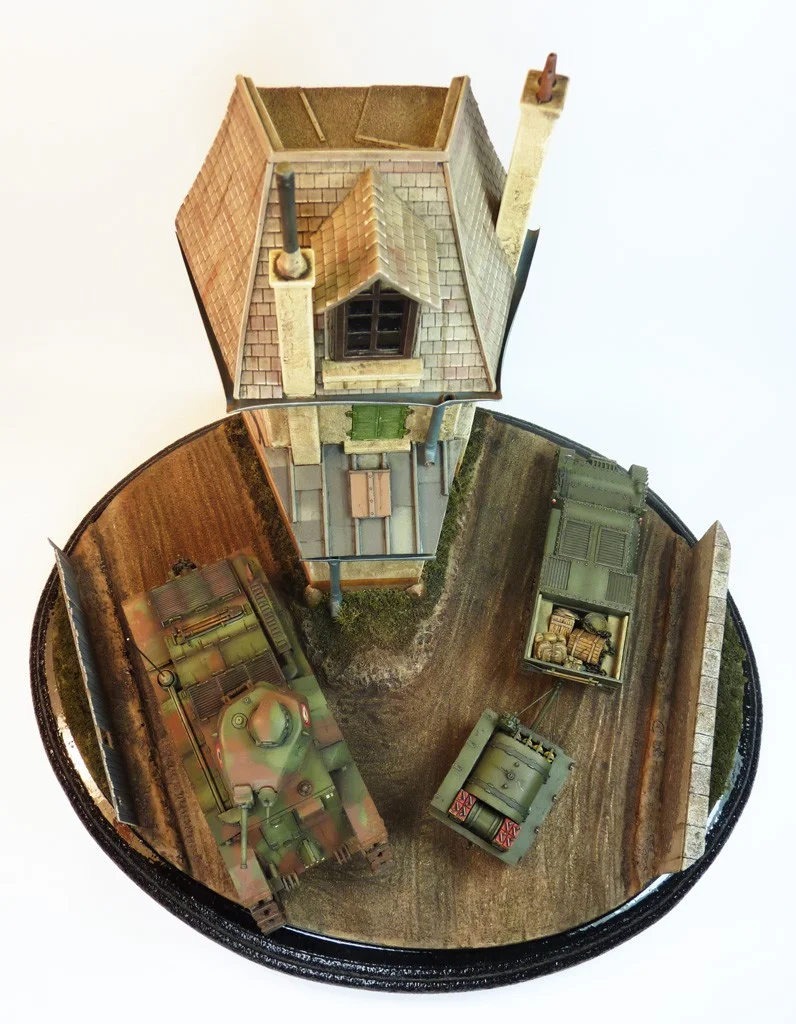
Scale 1/48 Gaso.line Renault char by Eric Deluy
The Renault D2 tank
The "Char D2" Renault, developed in 1931, is the successor to the Renault D1 medium tank. The D2 is taller, heavier, and features a new turret.
It was adopted by the French Army in 1933 and 100 were built in two series. The D2 is armed with a 47 SA gun in the turret and has up to 40 mm of armor for a weight of 20 tonnes.
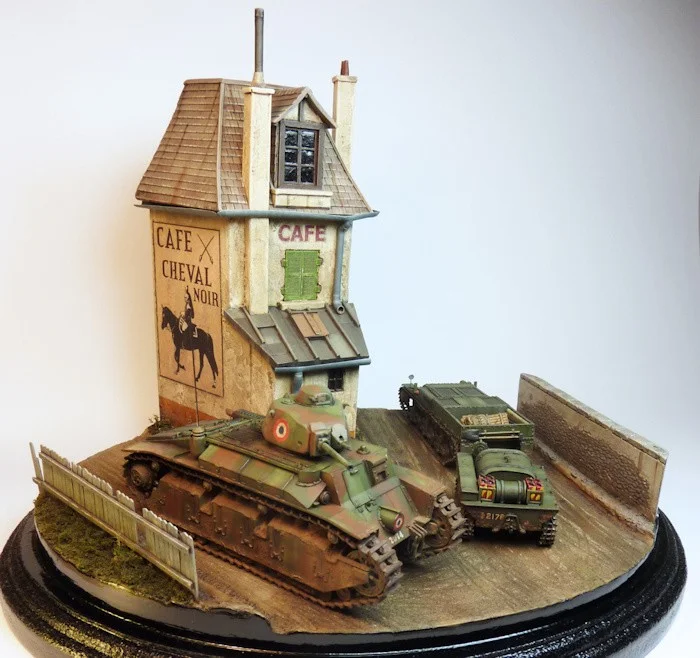
In 1937, Colonel de Gaulle commanded the 507th RCC for two years, equipped with Renault D2 tanks.
When war broke out, Charles de Gaulle, called to a higher command, did not forget his former regiment, and at the moment of engaging the battle, in May 1940, it was the first tanks to join his 4th Armored Division to be engaged offensively at Montcornet.
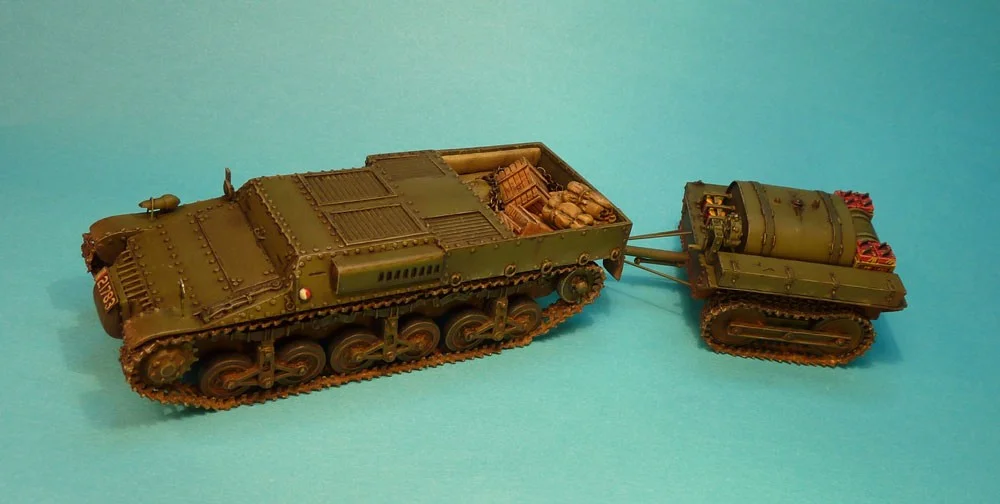
Armored transport, perhaps the ancestor of the CaRaPACE
The Lorraine 37L, or according to its official designation within the French army, the 1937 Tank Fuel and Ammunition Supply Tracked Vehicle (TRC 37L), is a half-track developed by Lorraine-Dietrich during the Interwar period, just before the outbreak of World War II. It was designed in response to a French army order launched in April 1936 for a completely armored vehicle for transporting fuel and ammunition, intended to supply tank units on the front line.
A bit of SEA history
It was during World War I, with the widespread use of mechanized means, that the need arose to establish a new "fuel" supply chain. This chain then consisted of the supply service, which supplied and stored fuel, and the automotive service, which transported it. At the same time, at the general headquarters, a service for fuels, oils, and lubricants was created. After the war, on July 12, 1920, the powder service took over the responsibilities of the supply service, and the artillery took on the role of distributor.
Texts partly taken from Wikipedia and the Ministry of Defence
Gaso.line model range offered by www.promodels.eu
Comments
Be the first to leave a message.
Thanks, your message is live.
Thanks, your message is awaiting moderation.