
Our heritage through models
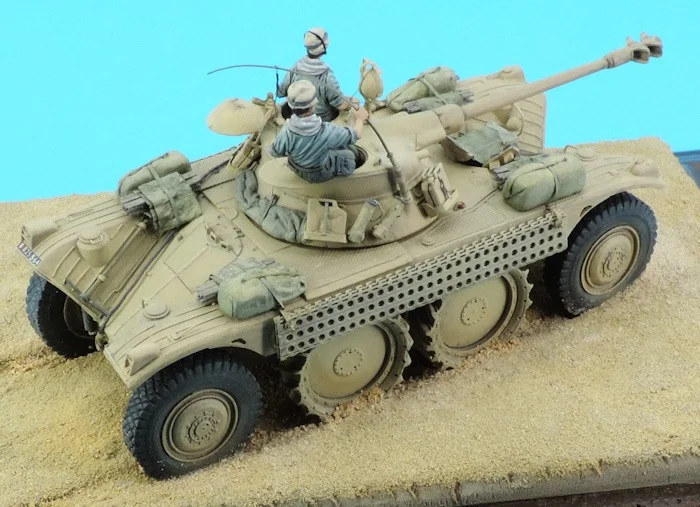
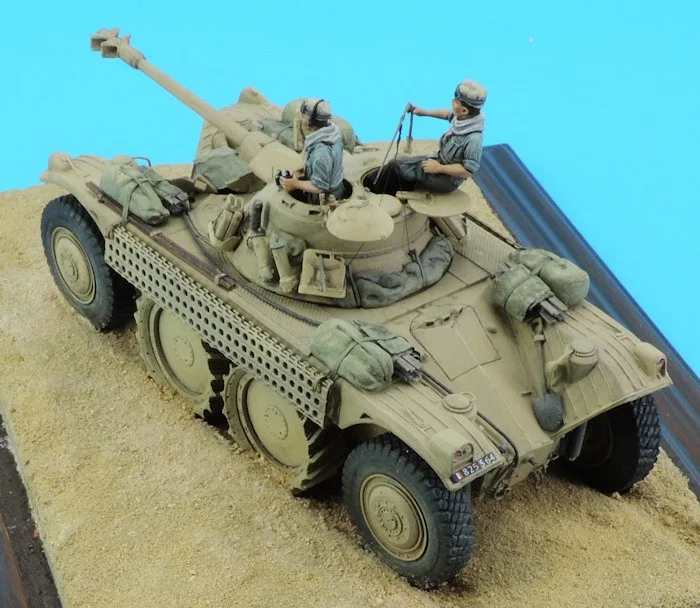
Model Gaso.line EBR Panhard by Thomas Seignon
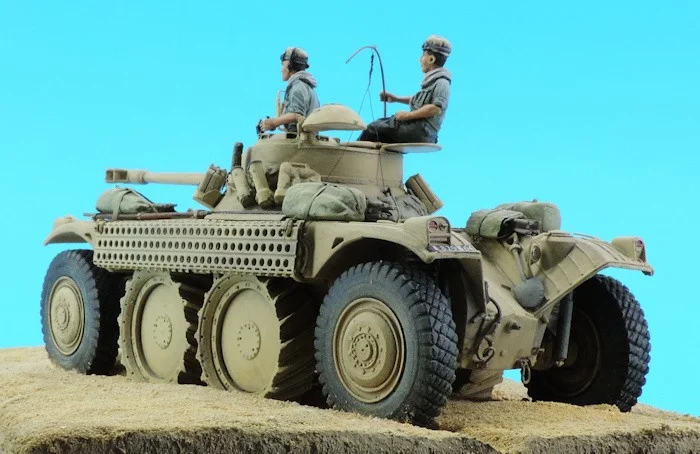
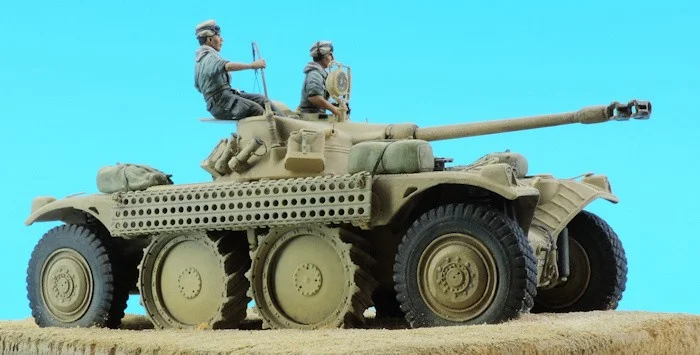
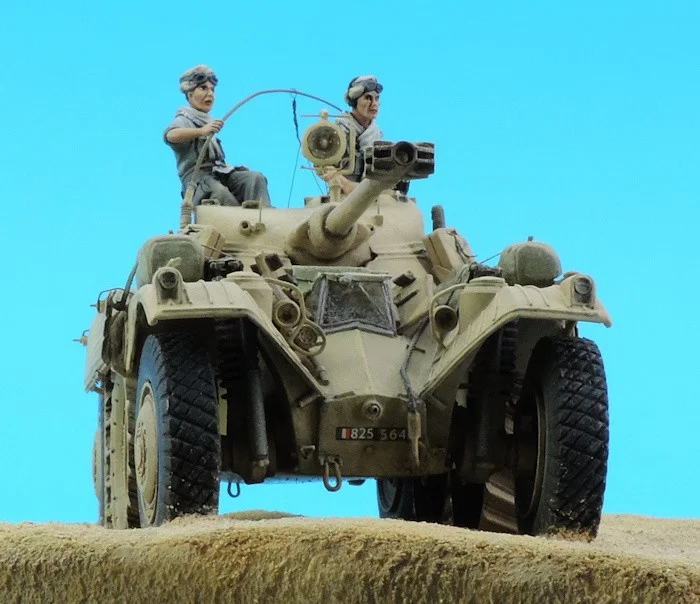
Panhard EBR model by Thomas Seignon
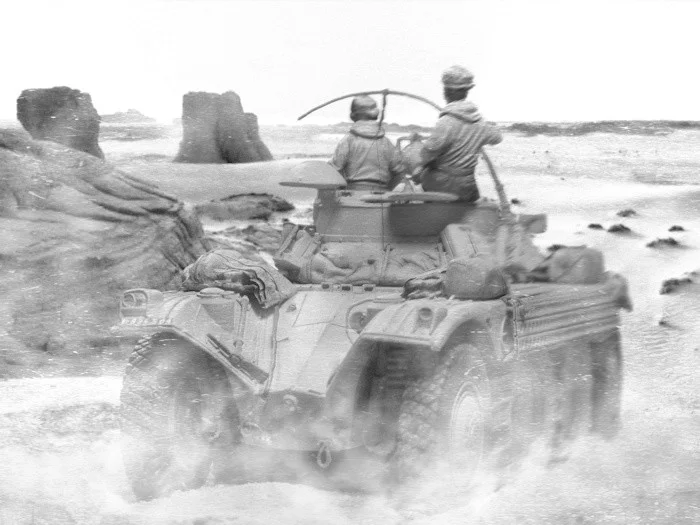
A diorama of the Panhard EBR to illustrate the raid of the 1st REC in Africa from January to March 1958
It was in October 1957 that the 1st Foreign Cavalry Regiment, based in Constantine, received its first EBRs to replace the aging AM M 8 and AM M 20 vehicles.
The arrival of the EBRs gave the regiment's command staff the opportunity to "make a statement" by mounting an operation that was out of the ordinary in the form of a 6000 km round trip raid from the northern coast of Algeria to the border of Niger in the south.
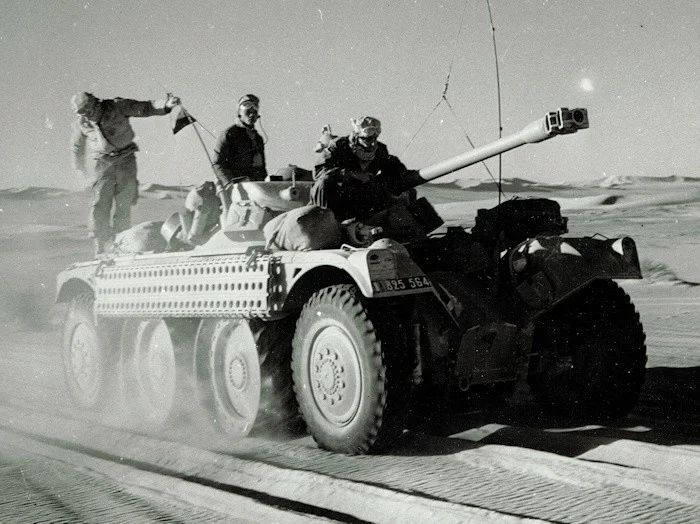
Copyright ECPAD
Such an adventure responds to several objectives:
-To familiarize oneself with new equipment by engaging men and machines in a challenging test for all involved.
-To demonstrate France's presence in the most remote parts of Algeria at a time when "events" are beginning to take on the proportions of what is not yet called a war.
-To communicate on the Legion's ability to go beyond the ordinary...And it is no coincidence that a team from the Cinematographic Establishment of the Army is part of the raid!
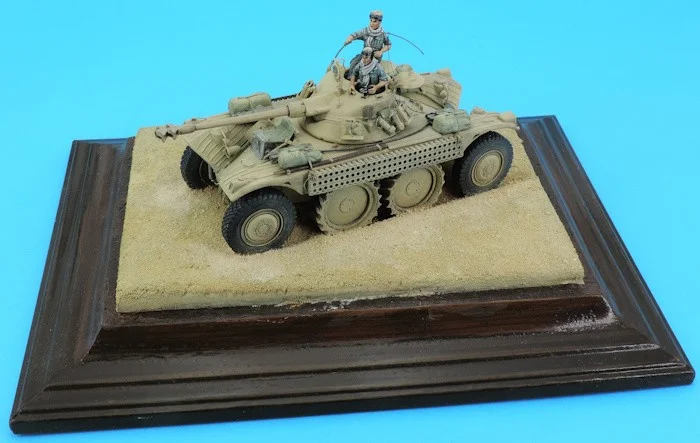
1/48 scale 13 cm model
The Gaso.line model at a scale of 1/48
The model comes from our Gaso.line range with several modifications and improvements made by Thomas Seignon to accurately represent the specifics of the equipment from this raid.
Our models can be used as high-end promotional miniatures, gifts, educational objects, but also to tell the story of a brand or history in general!
Our work is not just about reproducing "simply" an object because before working on a new project, we seek to understand the reason for its use and to know its history in order to properly grasp our subject and all its details to reproduce them as accurately as possible.
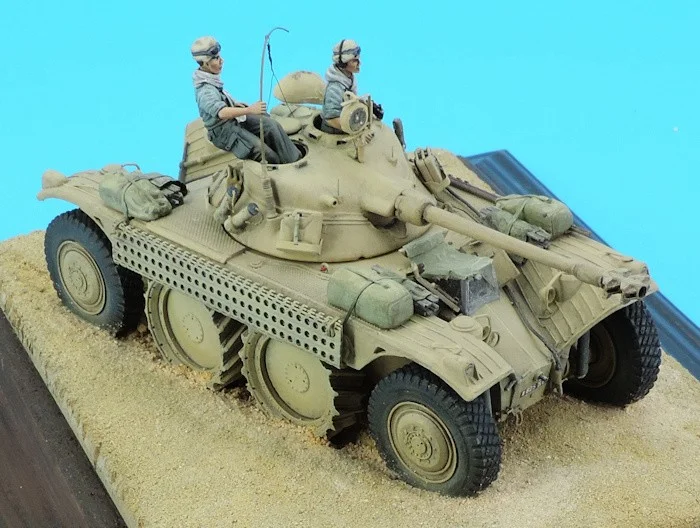
The raid of Panhard EBRs from the 1st REC in southern Algeria
At the orders of Squadron Leader DOROT, the mission is prepared with care. 6 EBR are specially prepared for this raid: reinforced suspensions, four sets of crossing plates per vehicle, increased capacity for carrying drinking water, full pneumatic fitting for 3 of the vehicles... A protection section in Dodge vehicles is also part of the journey, as well as a technical support team in Berliet "Gazelle" and GLR 8 vehicles. The bulk of the technical support is actually provided by regular soldiers, including conscripts. In total, about a hundred people are involved in this adventure.
Copyright Thomas Seignon
The convoy sets out in January 1958 from Constantine and heads to Biskra by road, via Batna and the western part of the Aurès mountain range. It continues its journey southward to Touggourt without major problems, except that the track replaces the road and vehicle maintenance requires particular attention.
The column then heads for Ouargla, deep in the desert, and descends along the oil fields of Hassi-Messaoud. Conditions become harsh for the equipment, which suffers from the sand, but also for the men, who face daily temperature variations of around thirty degrees! Crossing the Grand Erg Oriental to Fort Flatters, it is magnificent landscapes that accompany our soldiers who progress off-road. Upon arrival at Fort Flatters, an important maintenance session is necessary (a motor on an EBR needs to be changed).
Progress resumes towards Djanet (Fort Charlet), navigating from water point to water point and alternating between the mountainous regions of the Tassili n'Ajjer and areas of dunes and "fech fech" where the EBR is more at ease than the other vehicles in the convoy. From Djanet, the destination is southwest to Tamanrasset. The massif of the Hoggar must be crossed on winding mountain tracks that once again put the men and machines to the test.
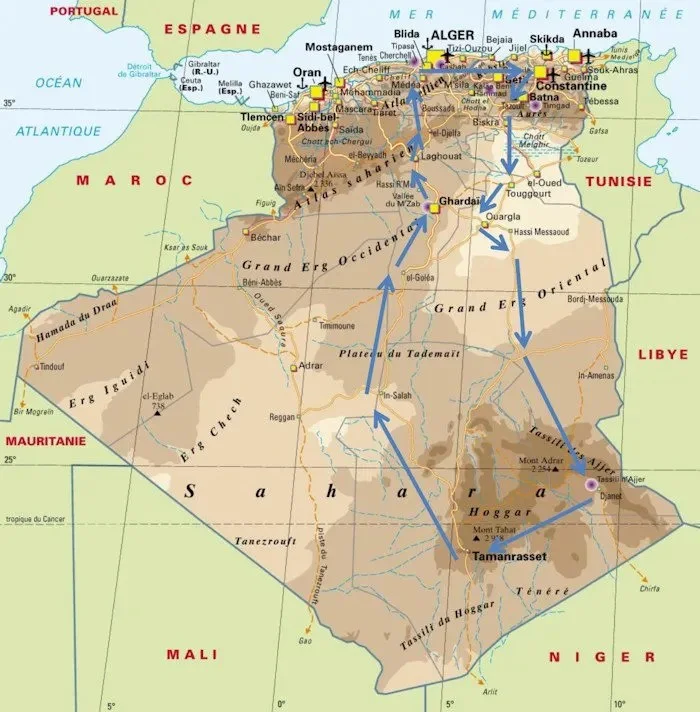
In Tamanrasset, mechanics must work overtime to repair all the vehicles. At this point, there are less than 500 km left to reach the In Guezzam post at the Niger border. Ultimately, the convoy will not proceed to In Guezzam, and it is decided to take the return route, heading north, from Tamanrasset.
It is again the Hoggar and then the crossing of the Mouydir mountains until In Salah. The northward climb continues on more or less marked tracks to El Goléa then Ghardaia where paved roads begin to reappear.
Starting from Laghouat, the column leaves the desert to reach the high plateaus of the Atlas and cross Djelfa and Médéa to reach Blida. It then remains only to head east to reach Constantine and put an end, in late March 1958, to this adventure as much human as technical.
Diorama, model, and historical text by Thomas Seignon
Comments
Be the first to leave a message.
Thanks, your message is live.
Thanks, your message is awaiting moderation.